Five gothic books that helped create modern horror
Mysterious castles, supernatural creatures, secrets, and tormented characters long before the major movie and video-game franchises.
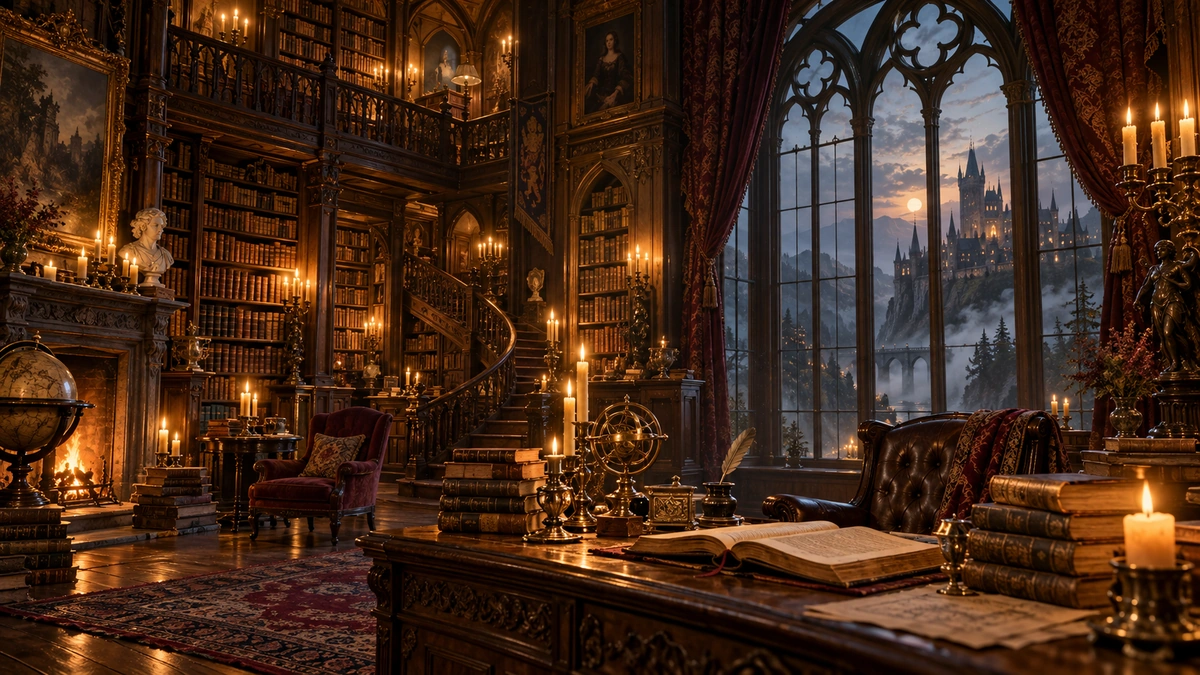
Before the big film franchises and horror games, literature was already full of mysterious castles, supernatural creatures, and tormented characters.
The gothic tradition helped develop elements that remain central to pop culture.
Discover five important works for understanding its influence.
1. 🏰 The Castle of Otranto — Horace Walpole
Published in 1764, The Castle of Otranto is frequently regarded as one of the starting points of the gothic novel.
The story features an aristocratic family, supernatural events, and a castle surrounded by mysteries.
The work helped establish conventions later used by other writers.
2. ⚡ Frankenstein — Mary Shelley
Published in 1818, Frankenstein follows a scientist who crosses extraordinary boundaries in his pursuit of knowledge.
The narrative combines gothic elements with questions that would also become essential to science fiction.
Beyond presenting a frightening creature, the book discusses responsibility, abandonment, and the consequences of human choices.
3. 🧛 Dracula — Bram Stoker
Published in 1897, Dracula uses letters, diaries, and other documents to tell a story involving the mysterious count from Transylvania.
The novel helped establish characteristics of the modern vampire.
Its influence has spread through literature, cinema, television, and video games.
4. 🧪 Strange Case of Dr Jekyll and Mr Hyde — Robert Louis Stevenson
Published in 1886, the book explores the connection between the respectable Dr. Jekyll and the threatening Mr. Hyde.
The narrative examines human duality and the conflict between social appearances and hidden desires.
Its influence can be seen in countless stories about double identities and transformation.
5. 🖼️ The Picture of Dorian Gray — Oscar Wilde
Originally published in 1890, The Picture of Dorian Gray follows a young man whose appearance remains remarkably unchanged while a portrait records the consequences of his life.
The work combines gothic elements with reflections on beauty, morality, and corruption.
It is a story in which true horror is deeply tied to the protagonist's choices.
🌑 What defines gothic literature?
Recurring elements include gloomy settings, family secrets, supernatural events, and psychological conflicts.
Characters may face external threats, but also their own fears and desires.
These characteristics have influenced many different forms of storytelling.
🎮 From books to video games
Many contemporary stories use devices associated with the gothic tradition.
Abandoned mansions, mysterious documents, dangerous scientific experiments, and supernatural creatures appear in games, movies, and shows.
Although not all these productions are direct adaptations, they share themes literature developed over centuries.
📖 Where should you start?
💬 What about you?
Which of these classics would you like to read or reread?
Tell us in the comments.
Mãe e Filha Geekando — two generations, one geek universe. 💜🎮
Share your thoughts
Comments are sent to our team for moderation and do not appear automatically on the website.