1980s horror: why do the decade's movies still scare us?
Creatures built with practical effects, unforgettable soundtracks, masked killers, and stories mixing fear with imagination.
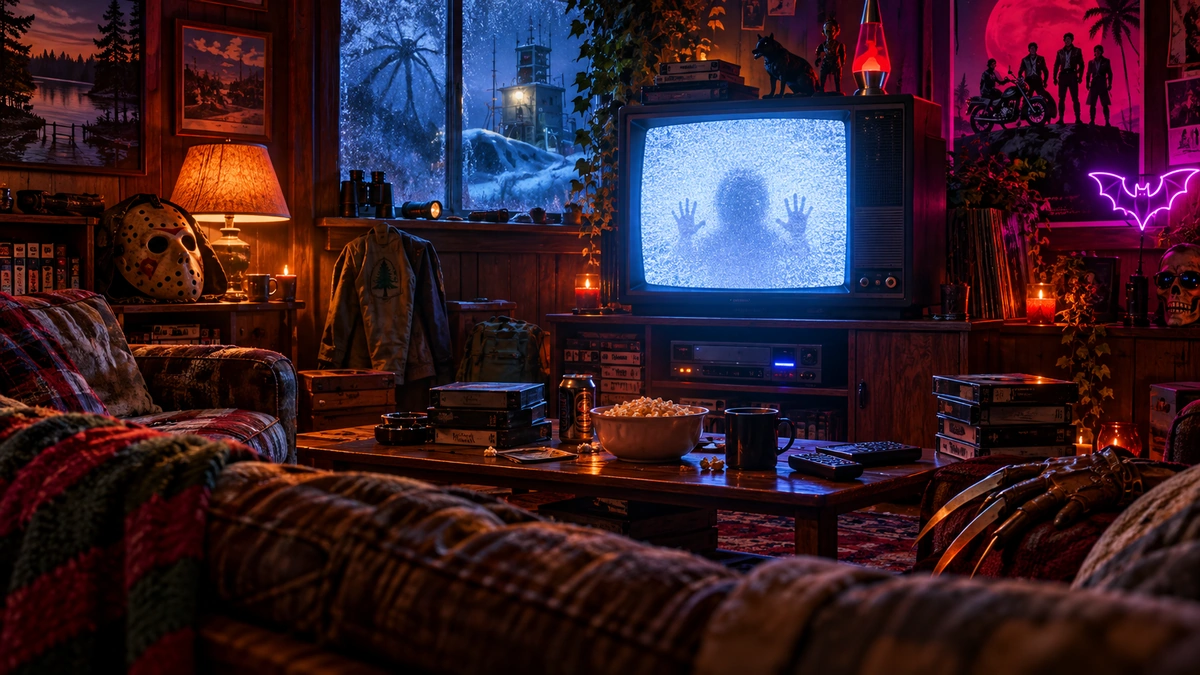
The 1980s were a landmark decade for horror cinema.
It was an era of practical-effects creatures, unforgettable soundtracks, masked killers, and stories that mixed fear with imagination.
Many films from that period still influence current productions.
But what made that era so special?
📼 The growth of horror in the 1980s
Horror cinema already had a long tradition before the 1980s.
However, the decade helped popularize different subgenres, especially slashers, supernatural horror, and stories involving bodily transformations.
Advances in makeup and special effects made it possible to create impressive creatures without relying on computer graphics.
At the same time, the home-video market helped audiences discover movies at home.
1. 🔪 Friday the 13th (1980)
The first Friday the 13th follows violent events at a summer camp.
The film helped establish slasher conventions, with isolated characters, suspense, and a mysterious threat.
The franchise would later turn Jason Voorhees into one of the genre's most recognizable icons.
2. 💤 A Nightmare on Elm Street (1984)
Directed by Wes Craven, the film introduces Freddy Krueger, a threatening figure who can attack his victims in their dreams.
The premise turns a fundamental human need — sleep — into a source of danger.
The character's appearance and the blend of reality and nightmare helped make the movie memorable.
3. ❄️ The Thing (1982)
Directed by John Carpenter, The Thing follows researchers isolated in Antarctica.
When a creature able to imitate other living beings threatens the group, trust between the characters begins to disappear.
The film combines science fiction, paranoia, and impressive practical effects.
Its impact also lies in the question that follows the audience: whom can we trust?
4. 📺 Poltergeist (1982)
A family begins experiencing supernatural events inside their own home.
Objects move, electronic devices behave strangely, and inexplicable situations turn the domestic environment into a threat.
Poltergeist explores a particularly effective fear: that the place where we feel safe may be hiding something dangerous.
5. 🧛 The Lost Boys (1987)
Blending vampires, humor, and youth culture, The Lost Boys offers a different approach to horror.
The story follows two brothers who move to a coastal town and discover a community surrounded by mysterious events.
The soundtrack, clothing, and aesthetic help capture the identity of the 1980s.
🎭 Why are practical effects still so impressive?
Makeup, prosthetics, mechanical puppets, and animatronics were used to create creatures and transformations.
These elements had a physical presence in front of the camera, allowing actors to interact with them directly.
That doesn't mean practical effects are always better than digital ones.
But their texture and physicality contributed to a very distinctive aesthetic.
👻 Does yesterday's horror still work today?
Technology has changed, along with editing rhythms and audience expectations.
However, certain fears remain universal.
The unknown, loss of control, isolation, and distrust are still effective themes.
Perhaps that is why so many movies from the decade are still revisited.
👩👧 Two generations in front of the same screen
For those who grew up watching movies on VHS, these productions can evoke special memories.
For younger audiences, they are an opportunity to discover the origins of characters and styles still present in pop culture.
🎃 What about you?
Which 1980s horror movie do you consider essential viewing?
Tell us in the comments.
Mãe e Filha Geekando — two generations, one geek universe. 💜🎮
Share your thoughts
Comments are sent to our team for moderation and do not appear automatically on the website.