Dracula, Frankenstein, and other classic monsters that never left pop culture
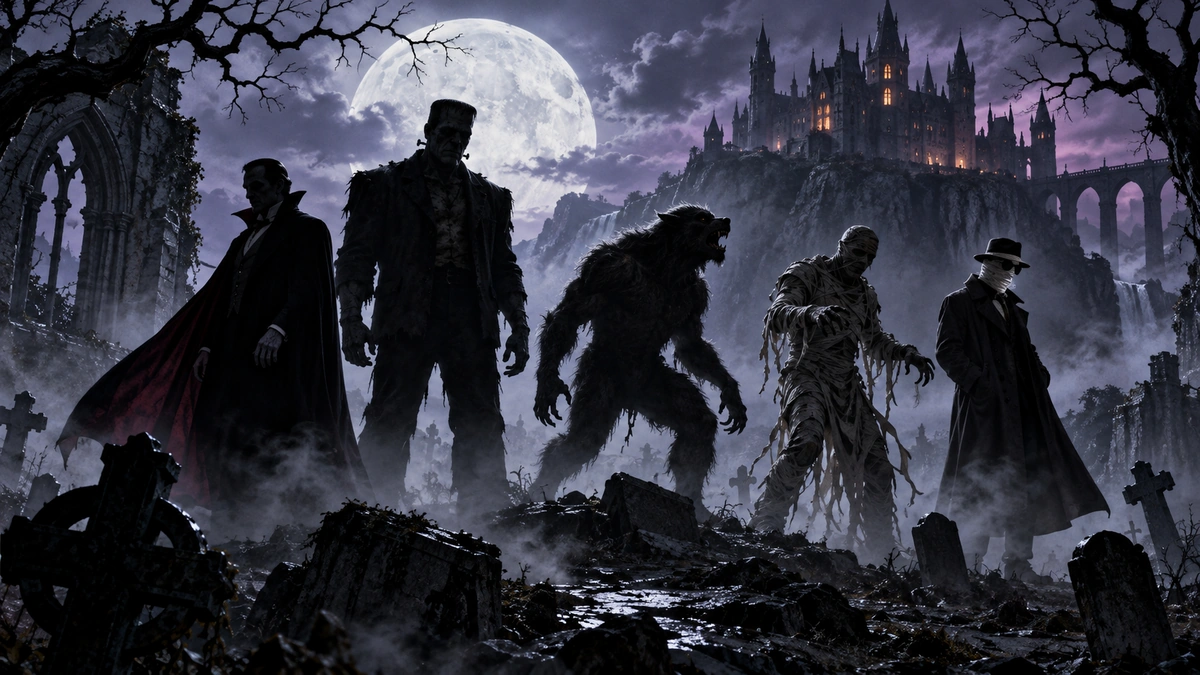
Vampires, creatures created by science, mummies, werewolves, and invisible figures continue to cross generations and inspire new interpretations.
Long before modern horror movies, certain creatures were already inspiring both fear and fascination.
Vampires, monsters created by science, mummies, and werewolves have crossed generations and still appear in movies, series, books, and video games.
But why do these figures remain so popular?
1. Dracula: literature's most famous vampire
Published in 1897, Bram Stoker's novel Dracula helped establish the image of the aristocratic, threatening vampire.
The character combines seduction, immortality, and fear of the unknown.
His influence can be seen in countless film adaptations and later characters.
Although vampire stories predate the novel, Dracula became one of the best-known depictions of these creatures.
2. Frankenstein's creature: the fear of science without limits
Frankenstein, published by Mary Shelley in 1818, tells the story of Victor Frankenstein, a scientist who creates a living being by extraordinary means.
A common misconception is to call the creature Frankenstein, when that is actually its creator's surname.
The story goes beyond horror.
It explores responsibility, rejection, loneliness, and the consequences of pursuing knowledge without considering its effects.
That is why it remains relevant in discussions of science and ethics.
3. The werewolf: transformation as a curse
Stories of humans transforming into wolves exist in many folk traditions.
In the movies, the werewolf became a symbol of the struggle between humanity and instinct.
The physical transformation usually represents a loss of control as well.
Films such as The Wolf Man (1941) helped popularize elements repeated in later productions.
4. The mummy: mystery and ancient curses
Cinema turned mummies into figures associated with tombs, treasures, and curses.
Movies such as The Mummy (1932) drew on Western fascination with ancient Egypt.
It's important to distinguish these cinematic fantasies from the actual funerary practices of ancient civilizations.
Mummification had religious and cultural meanings far more complex than those shown in horror and adventure movies.
5. The Invisible Man: the danger of going unseen
Published by H. G. Wells in 1897, The Invisible Man explores the consequences of an extraordinary scientific discovery.
Invisibility, initially presented as an impressive ability, also invites discussion about power, isolation, and lack of accountability.
Unlike supernatural creatures, this character represents fear of science used destructively.
🧠 Why do these monsters still feel relevant?
Each creature represents fears and conflicts that can be reinterpreted.
These possibilities help explain why the characters continue to receive new versions.
👩👧 A monster for each generation
One generation may have met Dracula through black-and-white movies.
Another may have discovered vampires through young-adult romances or contemporary TV series.
The same character takes on different styles while retaining recognizable elements.
🎃 What about you?
Which classic monster interests you the most: Dracula, Frankenstein's creature, the werewolf, the mummy, or the Invisible Man?
Tell us in the comments.
Mãe e Filha Geekando — two generations, one geek universe. 💜🎮
Share your thoughts
Comments are sent to our team for moderation and do not appear automatically on the website.