American Horror Story: Our Thoughts on All 12 Seasons of AHS
From Murder House to Delicate: a mother and daughter revisit the first 12 seasons and explain why AHS is still their favorite horror series.
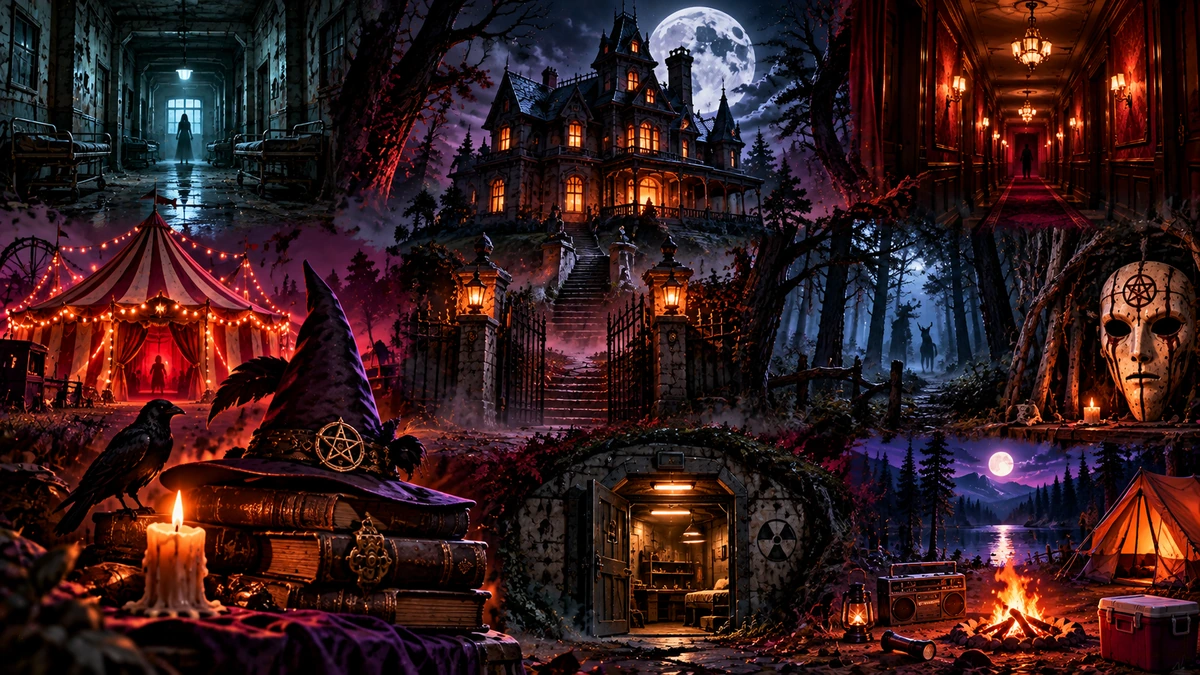
Some series keep us watching because we love the story. Others because we grow attached to the characters.
And some become something of a tradition.
For us, the mother and daughter behind Mãe e Filha Geekando, American Horror Story belongs in that last category.
AHS is our favorite horror series.
That does not mean we think every season is perfect. Quite the opposite: over the years, some stories hooked us from their very first minutes, while others took longer to win us over.
Maybe that is precisely why watching the show together is so much fun.
Every new season brings the same question:
“What has Ryan Murphy dreamed up this time?”
A house full of ghosts?
An asylum?
Witches?
A freak show?
A hotel?
A vanished colony?
A political cult?
The end of the world?
A slasher summer camp?
Aliens?
New York City?
A pregnancy surrounded by paranoia?
The answer changes, but we always get that feeling that we are stepping back into the strange, extravagant, disturbing and unpredictable world of American Horror Story.
Created by Ryan Murphy and Brad Falchuk, the series premiered in 2011 and embraced the anthology format: each season tells a new story, although characters, places and events sometimes reveal connections between different installments.
Before discussing Season 13, which deserves its own article once every episode is available and we have finished watching it, we want to revisit the journey that brought us here.
From Murder House to Delicate.
Without trying to settle once and for all which season is “the best.”
Above all, this is a conversation between a mother and daughter about a series we love.
1. Murder House — The House Where It All Began
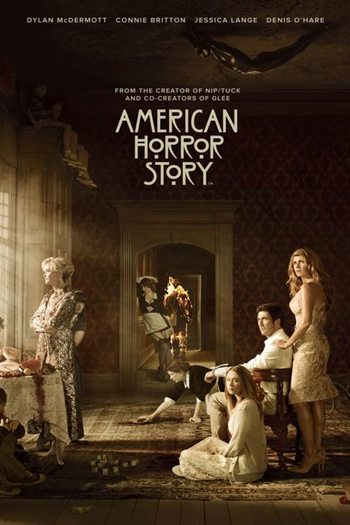
Season One introduced the formula that would make American Horror Story such an unusual series.
The Harmon family moves into a Los Angeles mansion, hoping to rebuild their lives.
Obviously, choosing that particular house was not exactly a wise decision.
Ben, Vivien and Violet begin to uncover the property's deeply disturbing history—and discover that its former residents may never have truly left.
The season premiered in 2011 and consists of 12 episodes.
Watching it today, it is fascinating to see how many features we associate with AHS were already there.
Ghosts.
Troubled families.
Morally questionable characters.
Sexuality.
Trauma.
Violence.
Macabre humor.
And the sense that virtually nobody is entirely innocent.
Murder House has something that never disappeared from AHS: the house is not merely a setting. It is part of the story.
It is also especially important when we look at everything that followed.
Without it, the universe we have followed for more than a decade would not exist.
2. Asylum — When AHS Showed Just How Far It Could Go
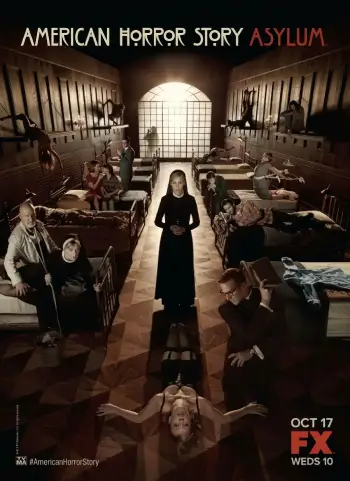
Then came Asylum.
Anyone who thought AHS would simply repeat its haunted-house story quickly realized that this season had something very different in mind.
The season takes us to Briarcliff, a psychiatric institution in the 1960s.
There we encounter religion, repression, medical experiments, serial killers, demonic possession and even extraterrestrial elements.
Does that sound like too much?
It really is.
And strangely, that mixture is part of the season's appeal.
FX's official website lists Asylum's 13 episodes and characters including Lana Winters, Sister Jude, Kit Walker, Dr. Arden and Dr. Thredson.
To us, Asylum captures a quality that made AHS special:
the series has never been afraid to go over the top.
Sometimes that excess works perfectly.
Sometimes it almost goes too far.
But this is hardly a timid show.
And Jessica Lange as Sister Jude remains impossible to ignore.
3. Coven — Witches, Rivalries and Characters Who Became Series Icons
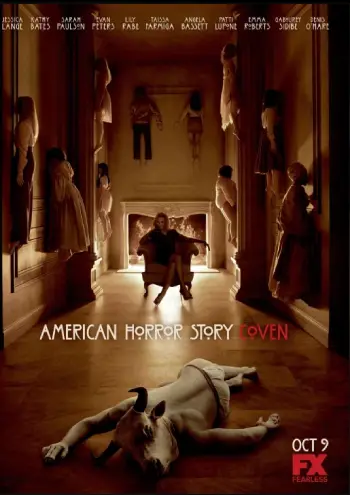
While Asylum plunged into claustrophobic surroundings, Coven brought a different kind of energy.
New Orleans.
Witchcraft.
Voodoo.
A school for young witches.
And a struggle to determine who will become the next Supreme.
The season follows characters who would become some of the most recognizable figures in the franchise.
Fiona Goode.
Cordelia.
Madison Montgomery.
Marie Laveau.
Misty Day.
Queenie.
Zoe.
Coven also reinforced something we really enjoy about AHS: watching the same actors return, completely transformed into new characters.
Jessica Lange, Sarah Paulson, Evan Peters, Lily Rabe, Emma Roberts, Frances Conroy, Angela Bassett and Kathy Bates helped create the feeling of a horror theater troupe.
We recognize their faces.
But we never know exactly whom they will play this time.
And that became part of the fun.
4. Freak Show — Perhaps One of the Most Melancholy Seasons
Freak Show takes us to Jupiter, Florida, in 1952, following a troupe of performers led by Elsa Mars.
AdoroCinema lists 13 episodes and highlights the group's arrival in the small town just as a threat begins terrorizing the area.
Twisty is probably the first character many people remember.
But reducing Freak Show to its clown would overlook much of what the season is trying to achieve.
There is a great deal of sadness in this story.
Its characters long to be accepted by a world that often treats them as curiosities.
And perhaps that is one of the most interesting contradictions in AHS.
The show uses extravagant, grotesque imagery, yet its most frightening monsters are often perfectly ordinary people.
5. Hotel — When Style and Horror Shared a Room
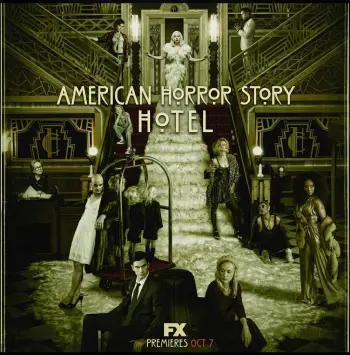
If any season understands the power of aesthetics, it is Hotel.
The Hotel Cortez practically demands your attention.
Its corridors.
Its rooms.
Its lighting.
Its costumes.
Its music.
Everything seems carefully designed to create a decadent, seductive atmosphere.
Lady Gaga joined the series as the Countess, while Wes Bentley played Detective John Lowe, whose investigation leads him straight into the hotel's secrets. The season had 12 episodes.
Hotel is a perfect example of something we love discussing after an AHS episode:
sometimes we enjoy the atmosphere as much as the story itself.
Because AHS is also about that.
Costume design.
Set design.
Soundtracks.
Larger-than-life characters.
We may forget small details of a scene's plot, but we rarely forget the image.
6. Roanoke — When the Series Played with Storytelling Itself
Roanoke made an interesting choice.
Instead of telling its story in the usual way, it began by imitating television programs that reconstruct supposedly true events.
Characters described their experiences while actors portrayed dramatized versions of them.
And just when we thought we understood what the show was doing...
It changed the rules again.
This is one of the seasons in which AHS most clearly experiments with television formats and with our relationship to what we consider “real.”
It is not a comfortable season.
Nor is it trying to be.
And maybe that is why it remains so interesting to discuss afterward.
7. Cult — When Horror Leaves the Supernatural Behind
Then came Cult.
And the series decided to show it did not need ghosts to make us uncomfortable.
The season explores fear, manipulation, radicalization, personality cults and paranoia.
Kai Anderson, played by Evan Peters, is particularly disturbing because so much of the horror comes from human behavior.
The absence of a dominant supernatural threat completely changes the season's atmosphere.
To us, one of the interesting things about following AHS for so many years is this:
the meaning of “horror” keeps changing.
In one season, it might be a ghost.
In another, an institution.
In another, an illness.
And sometimes, it is simply people.
8. Apocalypse — When the AHS Universe Started Coming Together
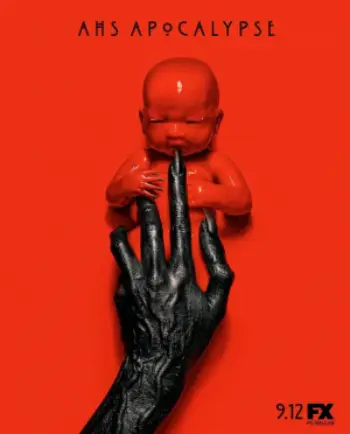
When Apocalypse was announced, one question felt inevitable:
what would happen if elements from earlier seasons came together?
The answer centered mainly on Murder House and Coven.
The season follows a post-apocalyptic world while bringing back characters, stories and conflicts familiar to fans.
Michael Langdon takes center stage.
The witches return.
And events from the earliest seasons take on new consequences.
For those who had followed the show since 2011, recognizing familiar references and characters felt particularly special.
It was the moment AHS made it clearer than ever that its anthology structure did not necessarily mean completely separate universes.
That idea remains important today—including in Season 13, which has already established new links to earlier installments. But we will save that discussion for our next article.
9. 1984 — A Wild Ride Through Slasher Movies
Summer camp.
Summer.
Young people making questionable decisions.
A killer.
More than one killer.
And a lot of blood.
1984 proudly embraced the slasher movies that left their mark on the 1970s and 1980s.
It may be one of the most entertaining seasons of AHS precisely because it knows exactly what kind of story it is telling.
There is excess.
There is nostalgia.
There are plot twists.
And there are so many deaths that, at some point, you simply accept them as part of the ride.
If you love horror movies, it is especially fun to recognize the genre's conventions as they are reused and turned upside down.
10. Double Feature — Two Stories, One Season
For its tenth season, AHS tried something new yet again.
Double Feature was divided into two stories.
Red Tide
A coastal town.
A writer searching for inspiration.
A mysterious substance.
And one very cruel question:
how much would someone be willing to sacrifice for talent?
This first part explores ambition, creativity and obsession in a particularly interesting way.
Death Valley
Then the season leaves that setting behind and dives into conspiracies involving extraterrestrials and historical events.
The change is dramatic.
Perhaps that is why Double Feature is one of the seasons that most invites debate.
You might love one half and dislike the other.
You might enjoy both.
Or you might simply admire the boldness of turning an entire season into an experiment.
FX lists Double Feature as the tenth season, with 10 episodes.
11. NYC — A Much More Human Kind of Horror
NYC brought another significant change in tone.
Set in New York City, the season follows LGBTQ+ community members facing disappearances, crimes and a growing threat.
But something feels very different here.
Little by little, the horror stops feeling like a mere metaphor.
The sense of loss, illness, prejudice and powerlessness gives the story a much heavier emotional weight.
FX lists NYC as Season 11, with 10 episodes.
This season can cause a different kind of discomfort.
Not necessarily the kind that comes from anticipating a jump scare.
Rather, the kind that comes from realizing how close fictional horror can be to real human experience.
And that feeling stays with you after the episode ends.
12. Delicate — Paranoia, Pregnancy and a Different Kind of AHS
Season 12 took the franchise in a new direction.
Delicate was inspired by Danielle Valentine's novel Delicate Condition, making it the first AHS season explicitly based on a book.
Emma Roberts plays Anna Victoria Alcott, an actress trying to become pregnant while her career takes off.
When she finally makes progress toward that dream, she begins to suspect that someone—or something—is interfering with her pregnancy.
The season relies heavily on paranoia.
Anna witnesses strange events.
The people around her do not seem to believe her.
And viewers must constantly decide what they think is real.
It was also a divisive season among audiences. On AdoroCinema, Delicate has a lower user rating than several earlier installments, and some reviews particularly criticize its pacing and character development.
And that, too, is part of our relationship with AHS.
Loving a series does not mean enjoying everything it produces equally.
Sometimes a season wins us over through its plot.
Another through its characters.
Another through its aesthetics.
And sometimes we see good ideas but feel they could have been explored differently.
Even so, we reach the ending still wanting to know:
“And now? What comes next?”
Perhaps the Great Secret of American Horror Story Is Its Willingness to Change
If someone asked why AHS is still our favorite horror series after so many years, there probably would not be a single answer.
It is the returning cast.
It is the anticipation of a new theme.
It is spotting an actress we love and finding out which completely different character she will play.
It is discussing theories.
It is complaining about a script decision.
It is being surprised by a scene.
It is noticing a reference to a season that aired years earlier.
It is ending an episode by saying:
“Just one more?”
American Horror Story has never been a particularly understated series.
When it wants to be strange, it gets very strange.
When it wants to be violent, it does not hold back.
When it decides to be glamorous, it can turn a simple entrance into a major event.
And when everything works, it creates characters and images that are hard to forget.
Jessica Lange, Sarah Paulson, Evan Peters and Company: The Faces That Made Us Love AHS
We cannot talk about our relationship with the series without mentioning its cast.
One of the anthology's best decisions was allowing actors to return as entirely different characters.
Jessica Lange played Constance Langdon, Sister Jude, Fiona Goode and Elsa Mars.
Sarah Paulson took on characters as different as Lana Winters, Cordelia Goode and Ally Mayfair-Richards.
Evan Peters played Tate Langdon, Kit Walker, Jimmy Darling, James March, Kai Anderson and many others.
Other performers—including Kathy Bates, Angela Bassett, Lily Rabe, Frances Conroy, Denis O'Hare, Emma Roberts and Billie Lourd—also helped shape the show's identity.
Perhaps that is why seeing these actors again feels almost familiar.
We do not know whom they will play.
But we know we are back in AHS.
What Do Mother and Daughter Love Most About AHS?
For us, the best part may be getting to talk about the series afterward.
Because AHS gives us so much to discuss.
One of us might pay closer attention to the story.
The other might notice a reference first.
One becomes suspicious of a particular character.
The other comes up with a completely different theory.
And because each season has its own world, there is always a fresh beginning.
It is rare to find a series that can reinvent itself so many times while keeping such a recognizable identity.
Not every change works equally well.
But we prefer a show that takes risks over one that repeats the same formula forever.
And What About Season 13?
It has already begun.
Season 13 premiered on September 24, 2026, and is doing something particularly interesting for longtime AHS viewers: bringing back actors, characters and elements from earlier seasons.
But we are not reviewing it here.
Nor will we make rushed judgments based only on its first few episodes.
We want to watch the entire season.
Spot the connections.
Develop our theories.
Disagree with each other when necessary.
And find out whether all those references really lead somewhere.
According to information released before the premiere, the season will have 13 episodes, airing weekly through the end of October.
Once every episode is available and we have finished watching, it will get its own article on Mãe e Filha Geekando.
Then we can talk about everything.
With spoilers.
Twelve Seasons Later...
From Murder House to Delicate, American Horror Story has taken us through haunted houses, asylums, witches, circuses, hotels, lost colonies, cults, apocalypses, summer camps, aliens, epidemics and conspiracies.
Some seasons have stayed with us more than others.
Others could probably fuel hours of discussion about what we would change.
But they are all part of the same experience.
For more than a decade, AHS has continued to do something that few series can manage:
keep us curious to find out what the next horror story will be.
And perhaps that is exactly why it still holds such a special place in our hearts.
Because here at Mãe e Filha Geekando, horror is also a family activity.
And American Horror Story remains our favorite horror series.
Now we want to know:
Which season of American Horror Story is your favorite?
Which one did you like the least?
And most importantly:
which season would you like to watch again as if it were your first time?
Tell us!
Two generations, one geek universe. Mãe e Filha Geekando.
💬 And You?
Which season of American Horror Story is your favorite?
Which one did you like the least?
And which would you like to experience again for the very first time?
Tell us in the comments.
Mãe e Filha Geekando — two generations, one geek universe. 💜🎮
Share your thoughts
Comments are sent to our team for moderation and do not appear automatically on the website.